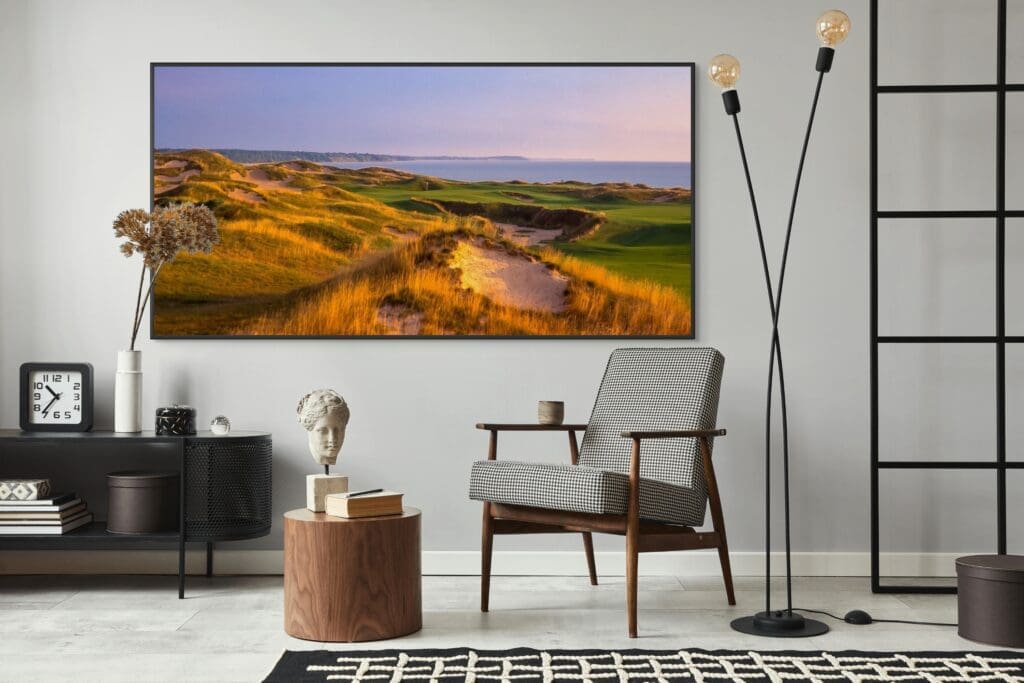
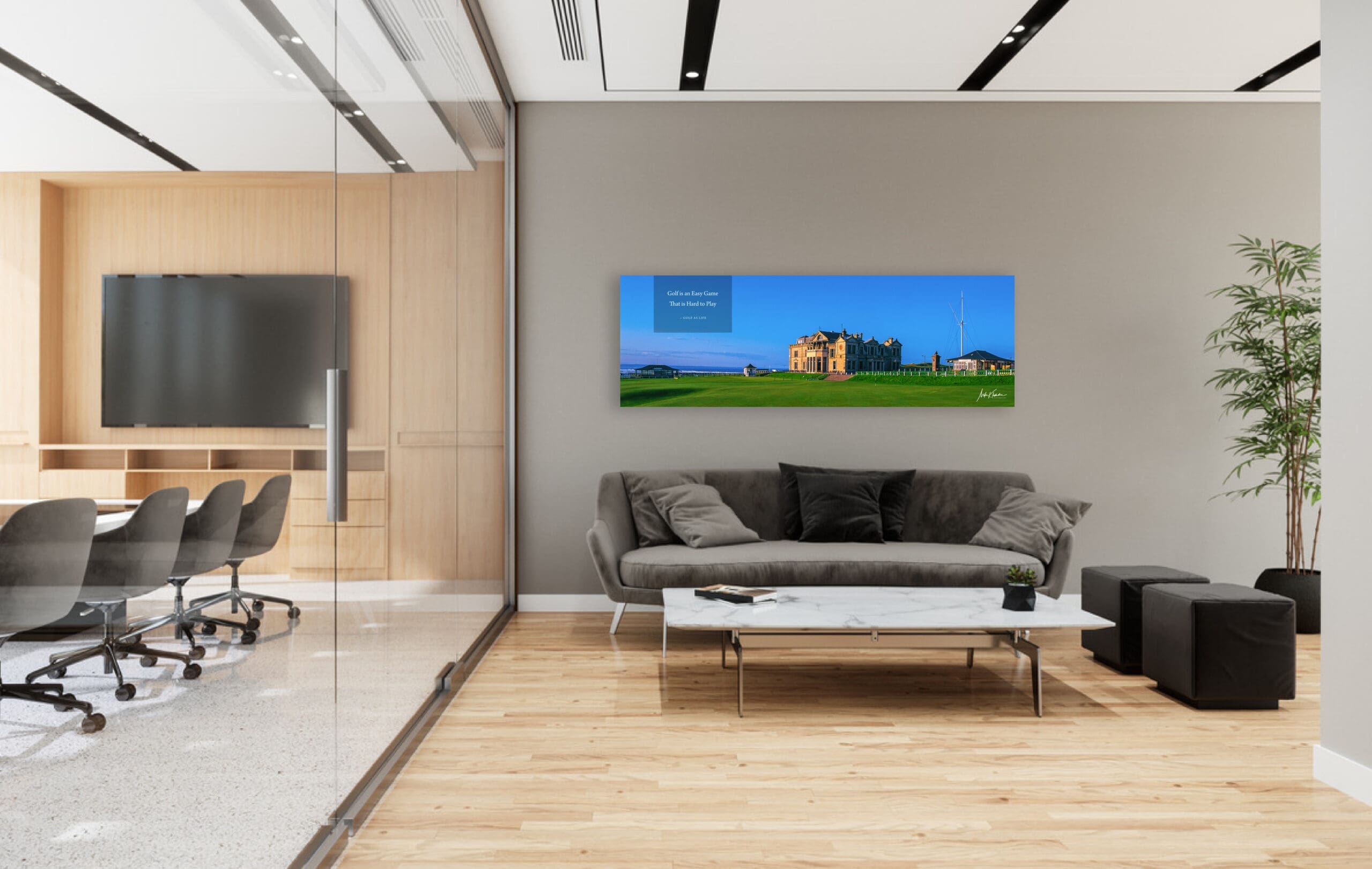
Most simulator rooms are built the same way: technology first, everything else later.
Screen. Software. Lighting. Then someone steps back and asks, “What do we do with these walls?”
That approach works… but it rarely creates a room people actually want to spend time in.
Most simulator rooms are built forward.
Technology first.
Screen placement.
Ceiling height.
Lighting.
Then, almost as an afterthought:
“What do we do with these walls?”
I’ve learned that the best simulator rooms are designed backward—starting with how the space should feel when someone steps inside.
The installer’s challenge (and I respect it)
Installers and builders already carry enough complexity:
– Tight tolerances
– Client expectations
– Acoustics, lighting, wiring
– Performance that has to work every time.
Artwork shouldn’t add friction to that process.
If it does, it doesn’t belong in the room.
That belief shapes how I approach simulator environments.
Art is not décor in this context
In a simulator room, artwork has one job:
Support the experience without competing with it.
That means:
– No visual noise
– No bright focal points pulling the eye
– No imagery that fights the screen
– No “gallery wall” thinking
The art should feel inevitable—like it was always meant to be there.
Why placement matters more than imagery
People often ask what image works best.
The better question is:
Where does it live?
The most effective placements:
– Sit just outside the primary sightline
– Balance the room left-to-right
– Create depth without demanding attention
– Are felt more than noticed
When done correctly, the room settles.
And when the room settles, the player does too.
Collaboration beats specification
I don’t install simulator systems—and I don’t want to.
Installers already own that responsibility. My role is to support the space you’re building, not complicate it.
The best projects happen when:
– Art is considered early enough to matter
– Everyone understands their lane
– The end user experiences a finished space, not a collection of parts
That’s when a room stops feeling technical—and starts feeling intentional.
A simple philosophy
Great simulator rooms don’t show off everything they contain.
They reveal just enough—and then get out of the way.
When the room feels right, the game takes care of itself.
If you’re curious what this could look like in your space, we’d be happy to create a complimentary custom art plan—no pressure, just a starting point.
https://airtable.com/apprzr0hsy3vdZhsz/shrnpgtsun9qPnipE