Most simulator conversations start with technology—launch monitors, screens, software.
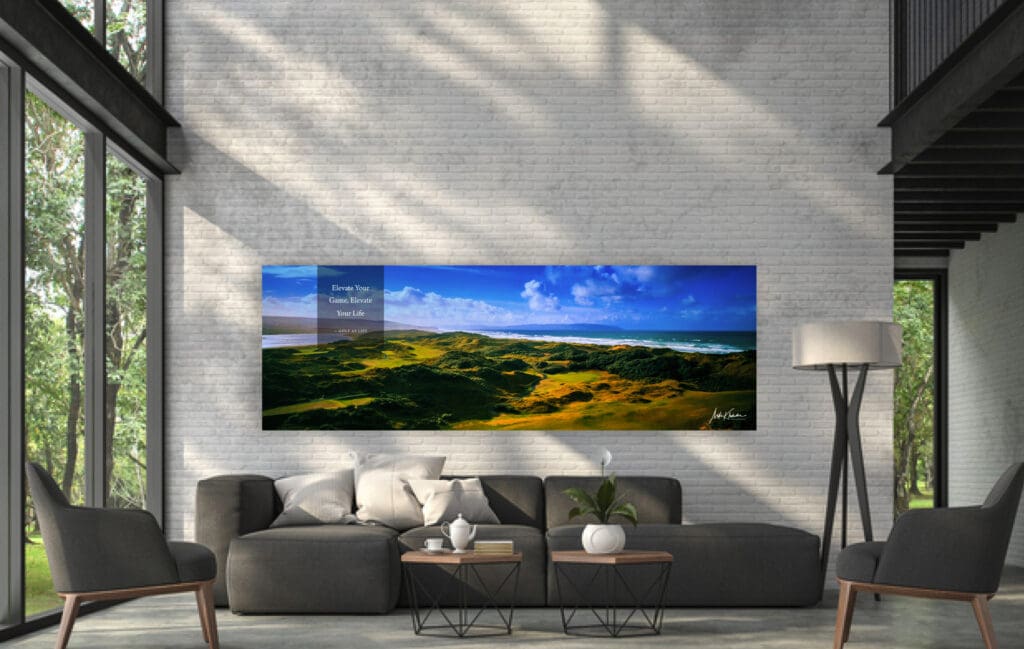
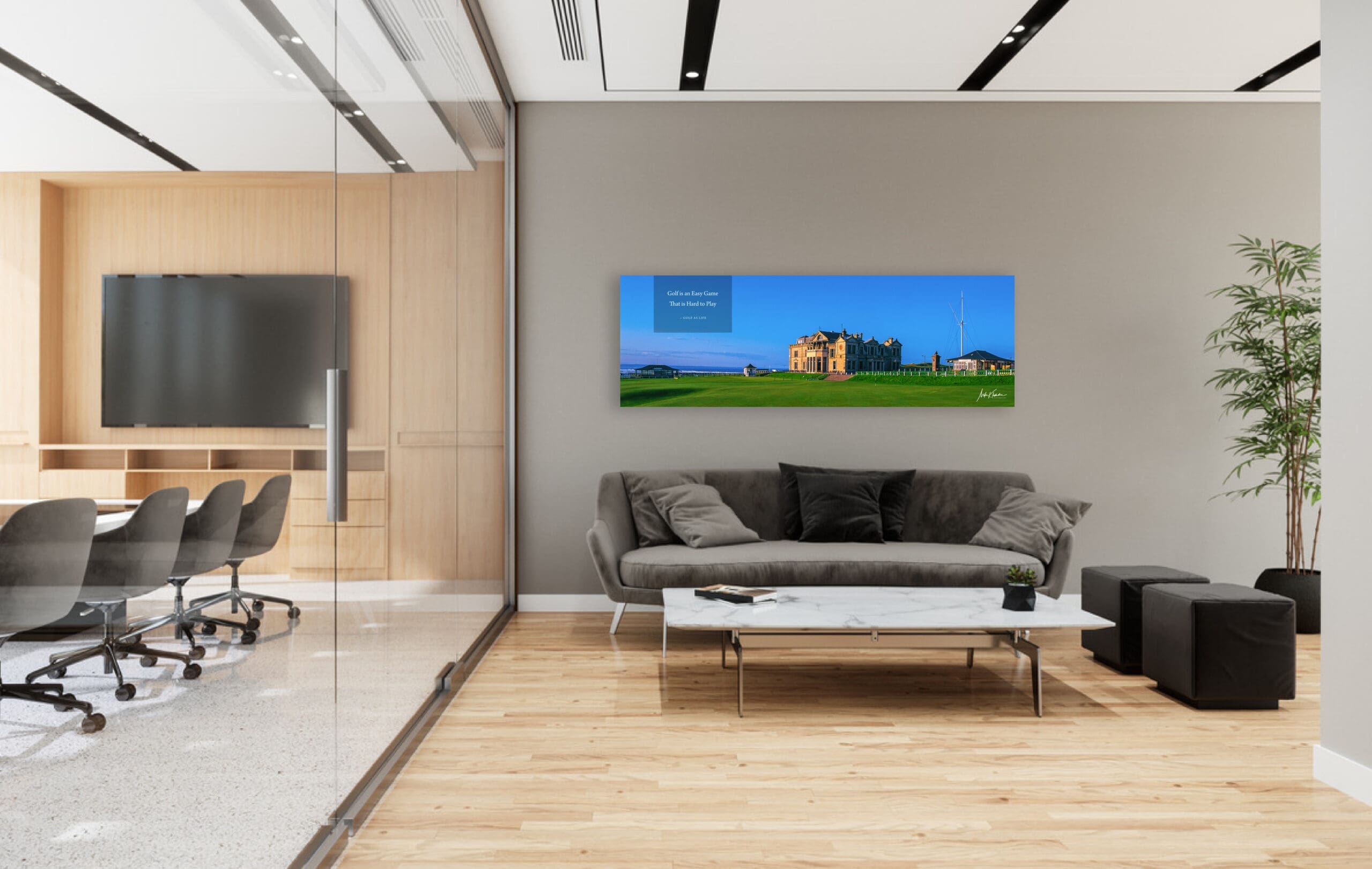
Over the past 40+ years, I’ve photographed more than 1,800 golf courses around the world. Recently, I’ve started applying that same understanding of space, light, and landscape to simulator environments—specifically how golf imagery can shape the feel of a room without distracting from the game.
And one thing has become clear:
The environment around the screen has more impact than most people realize.
Peripheral vision does the heavy lifting
When you stand in a simulator, you’re not just looking straight ahead. Your eyes are constantly processing what’s happening around the screen — the walls, the light, the color, the mood. If what surrounds you is busy, loud, or visually chaotic, your brain never fully settles.
If it’s calm, intentional, and grounded in place, the room disappears — and the game takes over.
That’s not decoration. That’s psychology.
Art in a simulator room has a different job.
In a home, office, or clubhouse, artwork can be a focal point.
In a simulator room, it shouldn’t be.
The best simulator art:
Lives in your peripheral vision
Adds atmosphere without distraction
Reinforces a sense of place, not performance
Completes the room rather than competing with the screen
When it’s done right, you don’t consciously notice it — but you feel the difference.
Why golf imagery works (when it’s done thoughtfully)
Golf courses are, at their core, landscapes shaped for rhythm, space, and restraint.
Those same qualities are exactly what a simulator room needs.
A well-chosen image of land, light, and horizon can:
Calm the visual field
Balance technology with nature
Give the room a sense of depth and breathing room
It’s the same reason great courses feel timeless — they don’t shout for attention.
Finishing the room, not filling the wall
I don’t think of simulator artwork as something added at the end.
I think of it as the final layer — the piece that makes the room feel complete.
Installers, designers, and owners who get this instinctively understand that the simulator isn’t just a machine in a box. It’s an experience you step into.
When the room is finished properly, people stay longer.
They relax faster.
And they come back more often.
A quiet philosophy going forward as I share more about simulator environments here, my focus will stay on:
How space affects performance and enjoyment
Why restraint beats decoration
And how art can support the game without ever stealing the spotlight
The simulator is the game. The room is the experience.
Curious what this could look like in your next project?
Get a free custom Art Plan—no cost, no obligation.
Let’s get started! https://airtable.com/apprzr0hsy3vdZhsz/shrnpgtsun9qPnipE